Category: Biographies

Profiles of people who changed the world for the better in the last hundred years, in every field and from every region.

  • Tim Berners-Lee (born 1955): The Man Who Gave the World the Web, for Free

    Tim Berners-Lee (born 1955): The Man Who Gave the World the Web, for Free

    Almost everything you do online, from reading this article to sending mobile money or watching a football highlight, rests on a system designed by one man in 1989. Tim Berners-Lee invented the World Wide Web while working at CERN, the European physics laboratory near Geneva. Then he made a choice that changed history: he and CERN gave it away free, so that anyone, anywhere, could use and build on it.

    At a glance

    • Born: 8 June 1955, London, England
    • Field: Computer science
    • Known for: Inventing the World Wide Web (1989–1991); founding the World Wide Web Consortium (W3C); Turing Award 2016

    A family of computer pioneers

    Berners-Lee was born in London to two mathematicians who had worked on one of the first commercial computers, the Ferranti Mark 1. He grew up surrounded by talk of computing. He studied physics at the Queen’s College, Oxford, where, according to his own accounts, he built a computer from an old television and other spare parts.

    The problem at CERN

    After working for several British technology companies, Berners-Lee went to CERN as a software consultant. CERN employed thousands of scientists from many countries, using different computers and software. Information was scattered and hard to find. In 1980 he wrote a programme called ENQUIRE to help keep track of people and projects by linking pieces of information together.

    By the late 1980s, the internet already existed as a network connecting computers, mainly in universities and research centres. What was missing was an easy way to share and link documents across it. In March 1989 Berners-Lee submitted a proposal for a global system of linked “hypertext” documents. His supervisor, Mike Sendall, famously wrote on the cover: “Vague but exciting”.

    Building the web

    Working with Belgian engineer Robert Cailliau and others, Berners-Lee developed the three building blocks that still underpin the web today:

    • HTML, the language used to write web pages;
    • URLs, the addresses that identify every page;
    • HTTP, the rules that let browsers and servers exchange pages.

    By the end of 1990 he had written the first web browser and the first web server, running on a NeXT computer at CERN. The first website explained what the web was and how to use it. In August 1991 he made the software available more widely and announced the project on internet newsgroups. The web began to spread, first among scientists and then far beyond.

    The decision not to patent

    The most important moment came in April 1993, when CERN announced that the web’s underlying technology would be available to everyone, royalty-free, with no fees and no permission required. Berners-Lee pushed for that decision. Had the web been patented and licensed, it might have split into competing private networks, each controlled by a company. Instead, it became a shared global platform on which anyone could build.

    In 1994 he founded the World Wide Web Consortium (W3C), based at the Massachusetts Institute of Technology, to develop open standards so the web would keep working the same way on every device and in every country.

    “This is for everyone”

    During the opening ceremony of the London 2012 Olympic Games, Berners-Lee appeared at a computer and typed a message that lit up the stadium: “This is for everyone”. It summed up his philosophy. He was knighted in 2004 and received the Turing Award, often described as the Nobel Prize of computing, in 2016.

    A critic of what the web became

    Berners-Lee has not been a cheerleader for every development online. He has spoken out against the concentration of power in a handful of large technology companies, the spread of misinformation and the harvesting of personal data. He co-founded the World Wide Web Foundation to push for affordable internet access and digital rights, especially in developing countries. He has also championed a project called Solid, which aims to give people control over their own data.

    The web and Africa

    Africa joined the web later than richer regions, but the open model he championed has mattered enormously for the continent. Because anyone can publish online without permission, African journalists, businesses, musicians and writers can reach a global audience directly. Kenya’s mobile-money innovations, Nigeria’s tech start-ups and South Africa’s online businesses all operate on infrastructure that no single country or company owns.

    The challenge now is access. Large parts of Africa’s population are still offline, and data costs remain high relative to incomes. Berners-Lee’s vision of a web “for everyone” will not be complete until that gap is closed.

    Why he matters

    Many inventors become rich from their inventions. Berners-Lee chose instead to make his free, and that choice created one of the most powerful tools for sharing knowledge in human history. It also gave platforms like this one, an independent Pan-African publication, the chance to exist and reach readers around the world.

  • Alexander Fleming (1881–1955): The Accident That Saved Millions of Lives

    Alexander Fleming (1881–1955): The Accident That Saved Millions of Lives

    Before antibiotics, a scratch from a rose thorn could kill. Childbirth, pneumonia and simple surgery carried a serious risk of fatal infection. That changed because of a discovery made almost by accident in a London laboratory in 1928. Alexander Fleming noticed that a mould had killed bacteria on one of his culture plates. From that observation came penicillin, the first true antibiotic, and with it one of the greatest advances in the history of medicine.

    At a glance

    • Born: 6 August 1881, Lochfield, Ayrshire, Scotland
    • Died: 11 March 1955, London
    • Field: Medicine, bacteriology
    • Known for: Discovering penicillin (1928); Nobel Prize in Physiology or Medicine 1945, shared with Howard Florey and Ernst Chain

    From farm to laboratory

    Fleming grew up on a hill farm in rural Scotland, the seventh of eight children. He moved to London as a teenager and worked in a shipping office for several years before an inheritance allowed him to study medicine at St Mary’s Hospital Medical School. He qualified with distinction and joined the hospital’s research department, where he would spend almost his whole career.

    Lessons from the war

    During the First World War, Fleming served in a battlefield hospital in France. He watched soldiers survive their wounds only to die of infection. The antiseptics doctors applied often did more harm than good, killing the body’s own defensive cells along with the bacteria. The experience left him searching for a substance that could destroy germs without harming the patient.

    In the early 1920s he discovered lysozyme, a natural enzyme found in tears, saliva and mucus that kills some bacteria. It was an important finding, but lysozyme was not powerful against the most dangerous germs.

    The mouldy plate

    In September 1928, Fleming returned from holiday to his famously untidy laboratory. Among a pile of dishes where he had been growing Staphylococcus bacteria, he noticed one that had been contaminated by a mould. Around the mould, the bacteria had been destroyed.

    Many scientists might have thrown the dish away. Fleming investigated. He identified the mould as a species of Penicillium, and found that the “mould juice” it produced killed a wide range of harmful bacteria while appearing harmless to human cells. He named the active substance penicillin and published his findings in 1929.

    But there was a problem. Penicillin was unstable and very difficult to extract and purify in useful quantities. Fleming was not a chemist, and he could not solve the problem. For about a decade, his discovery attracted little attention.

    The Oxford team

    The story of penicillin is not Fleming’s alone. In 1939, at the University of Oxford, the Australian pathologist Howard Florey and the German-born biochemist Ernst Chain, a refugee from Nazi Germany, picked up Fleming’s work. Their colleague Norman Heatley devised ingenious methods to grow the mould and extract the drug, at one point using bedpans and milk churns.

    In 1940 they showed that penicillin protected mice from deadly infections. In early 1941 they treated their first human patient, a police officer named Albert Alexander, who was dying from an infection that began with a scratch. He improved dramatically, but the team ran out of penicillin and he died. It was a heartbreaking demonstration that the drug worked, and that the world needed far more of it.

    Mass production

    With Britain under wartime pressure, Florey and Heatley travelled to the United States to seek help. American laboratories and drug companies developed methods to grow the mould in huge tanks. By the D-Day landings in June 1944, enough penicillin was available to treat Allied soldiers on a large scale. Deaths from infected wounds fell sharply.

    After the war, penicillin became available to civilians around the world. It transformed the treatment of pneumonia, meningitis, syphilis, gonorrhoea, scarlet fever and infected wounds. It also opened the door to dozens of other antibiotics developed in the following decades.

    Fame and a warning

    Fleming became a celebrity, partly because the British press preferred the simple story of a lone genius and a lucky accident. He was knighted in 1944 and shared the 1945 Nobel Prize with Florey and Chain. He was modest about his role, often saying that nature made penicillin and he merely found it.

    In his Nobel lecture, Fleming issued a warning that sounds remarkably modern. He said that bacteria could become resistant to penicillin if people took too little of it, or took it when it was not needed. He feared a time when the drug would be bought casually and misused. He died of a heart attack in London in 1955 and is buried in St Paul’s Cathedral.

    Why he matters, and why Africa should care

    Antibiotics have saved hundreds of millions of lives. They make modern surgery, cancer treatment and safe childbirth possible. But Fleming’s warning has come true. Antimicrobial resistance, where bacteria evolve to survive the drugs designed to kill them, is now one of the world’s biggest health threats. Research published in recent years has found that sub-Saharan Africa carries some of the highest death rates linked to drug-resistant infections.

    The causes include antibiotics sold without prescription, incomplete courses of treatment, poor sanitation and the use of antibiotics in livestock. The lesson of Fleming’s life is twofold: scientific curiosity can produce miracles, and those miracles must be protected. Investing in laboratories, regulating antibiotic sales and improving water and sanitation across Africa would honour his legacy better than any statue.

  • Malala Yousafzai (born 1997): The Girl Who Would Not Be Silenced

    Malala Yousafzai (born 1997): The Girl Who Would Not Be Silenced

    Malala Yousafzai was 15 years old when a gunman stopped her school bus in Pakistan’s Swat Valley and shot her in the head. Her crime was saying, publicly and repeatedly, that girls had a right to go to school. She survived, and instead of being silenced she became the world’s most recognised advocate for girls’ education. At 17 she became the youngest person ever to receive the Nobel Peace Prize.

    At a glance

    • Born: 12 July 1997, Mingora, Swat Valley, Pakistan
    • Field: Education, human rights
    • Known for: Campaigning for girls’ education; Nobel Peace Prize 2014 (shared with Kailash Satyarthi); co-founder of Malala Fund

    A school in the valley

    Malala grew up in Mingora, the main town of the Swat Valley in north-west Pakistan, a region of mountains, rivers and orchards once known as a tourist destination. Her father, Ziauddin Yousafzai, was a teacher and education activist who ran a group of schools, including one for girls. He encouraged his daughter to speak her mind, unusual in a society where girls were often expected to stay quiet.

    From around 2007, the Pakistani Taliban gained control of much of Swat. They banned television and music, attacked those who opposed them and began destroying schools, especially girls’ schools. Eventually they ordered that girls stop attending school altogether.

    Speaking out

    In early 2009, aged 11, Malala began writing an anonymous diary for the BBC’s Urdu service under a pen name, describing life under Taliban rule and her fear of losing her education. She went on to speak openly in interviews and documentaries, arguing that girls had a right to learn. Her profile grew within Pakistan, and in 2011 she received Pakistan’s first National Youth Peace Prize.

    The Pakistani army pushed the Taliban out of Swat’s main towns in 2009, but the militants did not disappear. Her visibility made her a target.

    The attack

    On 9 October 2012, a gunman boarded Malala’s school bus, asked which one was Malala, and shot her. The bullet went through her head and neck. Two other girls were also wounded. She was flown first to a military hospital in Pakistan and then to the Queen Elizabeth Hospital in Birmingham, England, which specialised in treating gunshot injuries.

    Against expectations, she recovered. The attack provoked outrage across Pakistan and around the world. Instead of frightening girls away from school, it turned Malala into a global symbol of the right to education.

    A global voice

    On her 16th birthday, 12 July 2013, Malala addressed the United Nations in New York. She called for free, compulsory education for every child and said that one child, one teacher, one pen and one book could change the world. The UN declared the date “Malala Day”. The same year, she published her memoir, I Am Malala, and she and her father co-founded the Malala Fund, which supports education programmes for girls in countries including Pakistan, Afghanistan, Nigeria and Ethiopia.

    In 2014 she shared the Nobel Peace Prize with Kailash Satyarthi, an Indian campaigner against child labour. The pairing, a Pakistani Muslim and an Indian Hindu, was widely seen as a message of peace between two rival nations. She learned of the prize while at school in Birmingham, and finished the school day before speaking to the media.

    Africa and girls’ education

    Malala has paid particular attention to Africa, where many of the world’s out-of-school girls live. In 2014, after Boko Haram kidnapped 276 schoolgirls from Chibok in north-east Nigeria, she travelled to Nigeria, met families of the missing girls and pressed the government to do more. She marked her 18th birthday in 2015 by opening a school for Syrian refugee girls in Lebanon. The Malala Fund has backed local education campaigners in several African countries, focusing on keeping girls in secondary school.

    Criticism and complexity

    In Pakistan, reactions to Malala have been mixed. Many celebrate her as a national hero. Others have accused her, without evidence, of serving Western interests, or have spread conspiracy theories about the attack. Some critics abroad argue that the attention given to one individual can overshadow the work of many local activists. Malala herself has often emphasised that she is “one of many girls”, and has used her platform to highlight other campaigners.

    Life after the Nobel

    Malala went on to study Philosophy, Politics and Economics at the University of Oxford, graduating in 2020. She married Asser Malik in 2021. She has continued campaigning, including speaking out about the Taliban’s ban on girls’ secondary and university education in Afghanistan, which she has called a form of gender apartheid.

    Why she matters

    Malala’s story shows the power of a single voice, but her cause is about millions. Around the world, tens of millions of girls are still out of school, many of them in sub-Saharan Africa. Educating girls is one of the most effective ways to reduce poverty, improve health and strengthen economies. Malala’s courage turned that statistic into a human story the world could not ignore.

  • A.P.J. Abdul Kalam (1931–2015): From Newspaper Boy to the People’s President

    A.P.J. Abdul Kalam (1931–2015): From Newspaper Boy to the People’s President

    Avul Pakir Jainulabdeen Abdul Kalam grew up in a modest home on a small island, selling newspapers to help support his family. He became one of India’s most important scientists, guiding its space and missile programmes, and later served as its president. But the role he loved most was teacher. Millions of young Indians, and many young people across the developing world, saw in him proof that talent and hard work could overcome a humble start.

    At a glance

    • Born: 15 October 1931, Rameswaram, Tamil Nadu, India
    • Died: 27 July 2015, Shillong, Meghalaya
    • Field: Aerospace engineering, science policy, education, politics
    • Known for: India’s first satellite launch vehicle; 11th President of India (2002–2007); author of Wings of Fire

    A small island town

    Kalam was born into a Tamil Muslim family on the island of Rameswaram, a Hindu pilgrimage town off India’s southern coast. His father owned and rented out boats and was also the imam of a local mosque. The family was not wealthy, and young Kalam delivered newspapers before school to earn money.

    He later wrote warmly about growing up in a town where Hindus and Muslims lived side by side, and about teachers who encouraged his curiosity. He was fascinated by birds in flight, and that fascination led him to study physics and then aeronautical engineering at the Madras Institute of Technology.

    Building India’s space programme

    Kalam’s dream was to be a fighter pilot. He narrowly missed selection for the Indian Air Force, finishing just outside the places available. Instead, he joined India’s Defence Research and Development Organisation in 1958, and in 1969 moved to the Indian Space Research Organisation.

    At ISRO, he was project director of India’s first indigenous satellite launch vehicle, the SLV-III. The first attempt in 1979 failed. Kalam later recalled how his boss, Satish Dhawan, took responsibility for the failure in front of the press, and then, when the launch succeeded in July 1980, let Kalam take the credit. He said it taught him the most important lesson in leadership. The successful launch put the Rohini satellite into orbit and made India one of a small number of countries able to launch its own satellites.

    Missiles and a contested legacy

    From the 1980s, Kalam led India’s Integrated Guided Missile Development Programme, which produced missiles such as Agni and Prithvi, earning him the nickname “Missile Man of India”. As chief scientific adviser to the government, he also played a central role in India’s nuclear tests in 1998.

    That part of his career is viewed differently depending on where one stands. Many Indians saw it as building national security and self-reliance. Peace campaigners and neighbouring countries saw it as feeding a dangerous arms race in South Asia. Kalam himself argued that strength was necessary for peace. Readers can weigh that argument for themselves; what is not in dispute is the scale of the scientific institutions he helped build.

    Science for everyday life

    Kalam was also interested in applying advanced technology to ordinary problems. He worked with cardiologist Soma Raju on a low-cost coronary stent, sometimes called the Kalam-Raju stent, to make heart treatment more affordable in India. He also supported the development of lightweight callipers for children with polio, using materials from missile research to replace heavy metal braces.

    The People’s President

    In 2002 Kalam was elected President of India with support from across the political spectrum. India’s presidency is largely ceremonial, but Kalam made it his own. He opened the presidential palace to the public, answered emails from children and travelled tirelessly to schools and universities. He became known as the “People’s President”.

    He set out a vision, called “India 2020”, for the country to become a developed nation through education, technology and rural development. He talked to students about dreaming big, working hard and serving their communities. His autobiography, Wings of Fire (1999), became a bestseller and remains widely read by Indian students.

    Teaching to the last

    After leaving office in 2007, Kalam returned to teaching, lecturing at universities across India. On 27 July 2015 he collapsed while giving a lecture at the Indian Institute of Management in Shillong, and died shortly afterwards, aged 83. It seemed fitting that his last moments were spent in front of students.

    He never married and owned few possessions. When he died, his belongings reportedly included books, a few clothes and a veena, a stringed instrument.

    Why he matters

    For countries in the Global South, Kalam’s story carries a powerful message: advanced science is not reserved for rich nations. With investment in education and institutions, a developing country can build space programmes, medical technology and world-class engineering capacity. Africa’s growing space agencies, including those in Nigeria, Egypt, Kenya and South Africa, are pursuing a path India travelled.

    His deeper legacy, though, is as a teacher. Kalam believed every young person carried potential that society had a duty to unlock. He spent his final years trying to unlock it, one classroom at a time.

  • Yuan Longping (1930–2021): The Scientist Who Fed Hundreds of Millions

    Yuan Longping (1930–2021): The Scientist Who Fed Hundreds of Millions

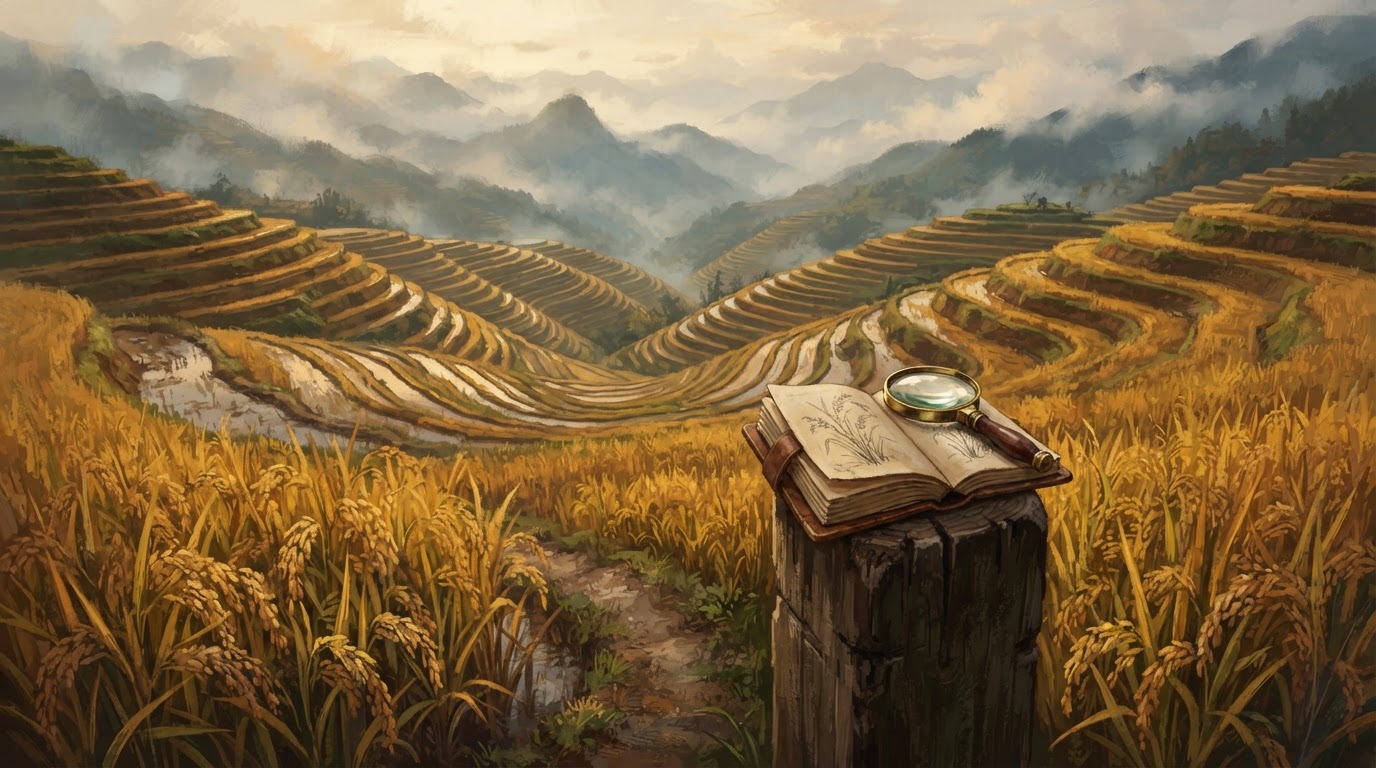
    Few people outside China know the name Yuan Longping. Yet his work may have done more to reduce hunger than almost anyone else’s in modern times. By developing the world’s first high-yielding hybrid rice, he helped a country that had suffered devastating famine feed itself, and he spent his later years sharing that knowledge with farmers across Asia and Africa.

    At a glance

    • Born: 7 September 1930, Beijing, China
    • Died: 22 May 2021, Changsha, Hunan
    • Field: Agricultural science
    • Known for: Developing hybrid rice; World Food Prize 2004 (shared with Monty Jones of Sierra Leone)

    A childhood of war and hunger

    Yuan grew up during years of war and upheaval in China, as his family moved repeatedly to escape the fighting. He studied agronomy and graduated from Southwest Agricultural College in 1953. He was then posted to teach at a small agricultural school in a remote part of Hunan province.

    Between 1959 and 1961, China suffered one of the worst famines in human history, caused largely by disastrous government policies. Tens of millions of people died. Yuan saw people starving around him, and he later said that experience made him determined to find a way to grow more food.

    The hybrid rice problem

    Farmers and scientists had long known that crossing two different plant varieties often produced offspring that grew more vigorously than either parent, a phenomenon called hybrid vigour. Hybrid maize had transformed farming in the United States. But rice was thought to be a poor candidate. Each rice flower pollinates itself, which makes producing hybrid seed on a large scale very difficult. Many experts believed it simply could not be done.

    Yuan disagreed. From the early 1960s he searched rice fields for natural mutants: plants whose male parts were sterile, so they could not pollinate themselves and would have to be cross-pollinated. He and his students examined thousands of plants by hand. Progress was slow, and the Cultural Revolution made scientific work difficult and dangerous.

    The breakthrough

    In 1970, Yuan’s team found a male-sterile wild rice plant on Hainan Island. It became the foundation of the breakthrough. By 1973 they had developed a “three-line” system using three different rice lines that allowed hybrid rice seed to be produced reliably and at scale.

    The results were dramatic. Hybrid rice produced yields roughly 20% higher than conventional varieties. Within a few years it spread rapidly across China. Over the following decades it became a large share of China’s rice crop, helping the country move from food shortages to food security even as its population grew.

    Pushing further

    Yuan did not stop. He developed a simpler “two-line” system in the 1990s and then led China’s “super hybrid rice” programme, which set ever more ambitious yield targets. In his eighties and even past ninety, he continued to work in the fields, saying he wanted to keep raising yields for as long as he could.

    He often spoke of two dreams. In the first, he walked beneath rice plants as tall as sorghum, with grains as large as peanuts. In the second, hybrid rice was grown around the world so that no one would go hungry.

    Africa connection

    Yuan’s second dream brought him close to Africa. Hybrid rice technology and training programmes linked to his research reached many African countries, including Madagascar, where Chinese agronomists worked with local farmers to introduce higher-yielding varieties. Thousands of agricultural specialists from developing countries trained at institutions associated with his work in Hunan.

    When Yuan received the World Food Prize in 2004, he shared it with Monty Jones, a plant breeder from Sierra Leone. Jones had developed NERICA, the “New Rice for Africa”, which combined high-yielding Asian rice with hardy African rice to suit the continent’s conditions. The pairing of the two scientists, one Chinese and one African, captured the possibility of shared progress in feeding the Global South.

    A national hero

    In China, Yuan was revered. He lived modestly, played the violin and loved swimming, and spoke with farmers as easily as with ministers. When he died in May 2021, aged 90, crowds lined the streets of Changsha in the rain, and many people left bowls of rice and flowers in tribute.

    Why he matters

    Hunger remains one of humanity’s oldest problems, and Africa now faces the fastest population growth and some of the greatest food-security challenges of any region. Yuan’s life shows what patient, practical science can achieve. He did not invent a slogan or a policy; he spent decades in muddy fields, looking for a single plant that could change everything.

    For African governments and researchers, his story also carries a lesson: food security comes from long-term investment in agricultural science, training and seed systems, not from short-term imports. Hybrid rice alone will not solve Africa’s food challenges, but the approach that produced it, sustained research aimed at the needs of small farmers, remains a model worth following.

  • Mahatma Gandhi (1869–1948): The Power of Non-Violence

    Mahatma Gandhi (1869–1948): The Power of Non-Violence

    Mohandas Karamchand Gandhi was born in the nineteenth century, but his greatest impact came in the twentieth. In the late 1920s and 1930s he turned the campaign for Indian independence into a mass movement of millions. His central idea, that ordinary people could defeat powerful governments through organised, disciplined non-violence, travelled far beyond India. It shaped the American civil rights movement, anti-colonial struggles in Africa and protest movements around the world.

    At a glance

    • Born: 2 October 1869, Porbandar, western India
    • Died: 30 January 1948, New Delhi
    • Field: Politics, civil resistance, ethics
    • Known for: Leading India’s independence movement; developing satyagraha (non-violent resistance); the 1930 Salt March

    Early life and South Africa

    Gandhi grew up in a merchant-caste Hindu family in Gujarat. He trained as a lawyer in London and, struggling to build a career in India, accepted a job in South Africa in 1893. Soon after arriving, he was thrown off a first-class train compartment at Pietermaritzburg because he was not white. He later described that cold night on the station platform as a turning point.

    Gandhi spent more than 20 years in South Africa, organising the Indian community against discriminatory laws. There he developed satyagraha, which he translated as “truth-force”: the deliberate, peaceful breaking of unjust laws and the willing acceptance of punishment, in order to shame the authorities and win over public opinion.

    A difficult truth for African readers

    Gandhi’s South African years also include writings that many Africans find painful. In that period he campaigned for the rights of Indians, not of Black Africans, and he sometimes described Black South Africans in openly racist language, arguing that Indians should not be classed alongside them. Historians debate how far his views changed later in life. In 2018, a statue of Gandhi was removed from the University of Ghana after students and staff protested over these writings. Any honest account of his life must include this.

    Return to India

    Gandhi returned to India in 1915. He travelled widely, dressing simply and living among ordinary people. In 1917 he helped indigo farmers in Champaran, Bihar, resist exploitative planters, his first major campaign in India. By the early 1920s he led the Indian National Congress and launched a nationwide non-cooperation movement, calling on Indians to boycott British goods, courts and schools.

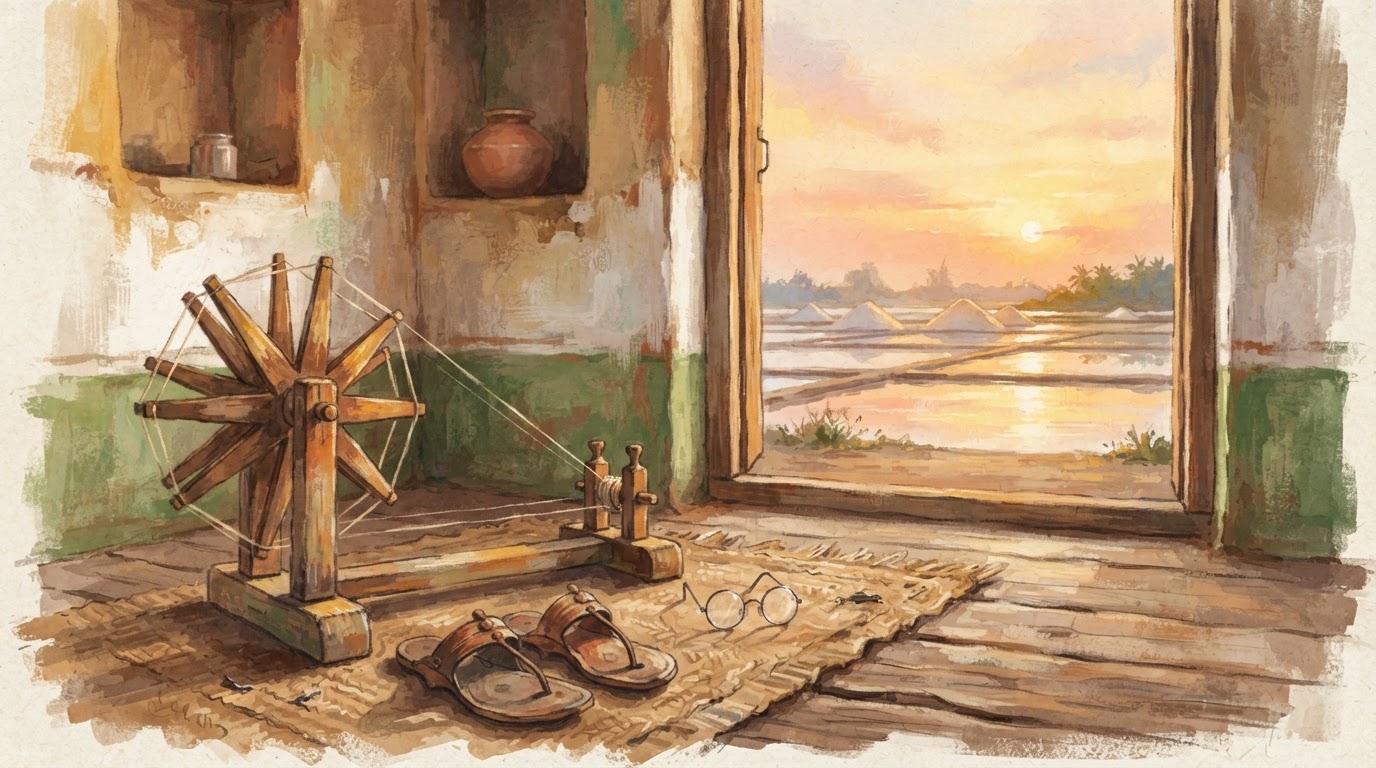
    He promoted khadi, hand-spun cloth, as a symbol of self-reliance. The spinning wheel became the emblem of the movement, a direct challenge to the British textile industry that had wrecked India’s handloom economy.

    The Salt March

    Gandhi’s most famous campaign came in 1930. The British held a monopoly on salt and taxed it, hitting the poorest Indians hardest. On 12 March, Gandhi set out from his ashram near Ahmedabad with a small group of followers and walked about 240 miles to the coastal village of Dandi. Crowds joined him along the way. On 6 April he picked up a handful of salty mud from the shore, breaking the law.

    The act sparked civil disobedience across India. Tens of thousands of people were arrested, including Gandhi. International newspapers reported on peaceful protesters being beaten by police, and the moral standing of British rule suffered badly. The march showed how a simple, symbolic act could mobilise a whole country.

    Quit India and independence

    In 1942, during the Second World War, Gandhi launched the “Quit India” movement, demanding an immediate end to British rule. He and the Congress leadership were imprisoned for much of the war. By 1945, Britain was exhausted and Indian independence was only a matter of time.

    Independence came on 15 August 1947, but not in the form Gandhi wanted. British India was partitioned into India and Pakistan. The division triggered horrific violence between Hindus, Muslims and Sikhs, and up to a million people may have died, with many millions displaced. Gandhi spent the period of independence not celebrating in Delhi but in riot-hit areas, fasting and pleading for peace.

    Assassination

    On 30 January 1948, Gandhi was shot dead at a prayer meeting in New Delhi by Nathuram Godse, a Hindu nationalist who believed Gandhi had been too accommodating towards Muslims and Pakistan. He was 78.

    His influence on Africa and the world

    Gandhi’s methods inspired leaders across the colonised world. Kwame Nkrumah described his campaign of “positive action” in the Gold Coast as drawing on non-violent principles. Kenneth Kaunda in Zambia and Albert Luthuli in South Africa admired Gandhi’s approach. Martin Luther King Jr. travelled to India in 1959 and described Gandhi as the guiding light of his technique of non-violent social change.

    Mandela, who turned to armed struggle when peaceful protest was met with massacre, still spoke of Gandhi with respect, noting that non-violence works best when your opponent has a conscience that can be reached. That debate, about when non-violence is possible and when it is not, continues today.

    Why he matters

    Gandhi demonstrated that the power of governments rests on the cooperation of the governed, and that when people withdraw that cooperation together, even an empire can be forced to retreat. His tools, from boycotts and marches to hunger strikes and civil disobedience, remain part of every protest movement’s playbook.

    He was also a flawed human being, as his South African writings show. Remembering him honestly, as both an extraordinary strategist of freedom and a man shaped by the prejudices of his time, is more useful than treating him as a saint. The ideas he developed outlived his own limitations, and they have been used by people he never imagined, including the African freedom fighters he once overlooked.

  • Kofi Annan (1938–2018): Africa’s Voice at the Head of the World’s Table

    Kofi Annan (1938–2018): Africa’s Voice at the Head of the World’s Table

    Kofi Annan spent almost his entire working life inside the United Nations, starting as a junior budget officer and ending as its leader. As the seventh Secretary-General, he led the UN through some of its most difficult years and pushed it to take poverty, disease and human rights more seriously. He shared the Nobel Peace Prize with the organisation in 2001. He also carried the weight of its failures, and he was willing to say so publicly.

    At a glance

    • Born: 8 April 1938, Kumasi, Gold Coast (now Ghana)
    • Died: 18 August 2018, Bern, Switzerland
    • Field: Diplomacy, international development, peace-building
    • Known for: UN Secretary-General (1997–2006); Nobel Peace Prize 2001; the Millennium Development Goals

    A child of independence

    Annan was born in Kumasi, a twin, into a prominent Fante family. His father was a provincial governor and a manager at a cocoa-trading company. As a teenager at Mfantsipim School he watched the Gold Coast become Ghana, the first sub-Saharan African country to win independence from colonial rule, in 1957. He later said that experience convinced him that change was possible.

    He studied at what is now the Kwame Nkrumah University of Science and Technology before winning a scholarship to Macalester College in Minnesota, where he earned a degree in economics. He continued his studies in Geneva and, later in his career, completed a master’s degree in management at the Massachusetts Institute of Technology.

    Rising through the UN

    Annan joined the World Health Organization in Geneva in 1962. Over the next three decades he worked across the UN system, in budgets, personnel, refugees and peacekeeping. He was known for his calm manner, his patience and his ability to listen. In 1993 he became head of UN peacekeeping.

    That role brought the darkest moments of his career. In 1994, during the Rwandan genocide, the UN failed to reinforce its small peacekeeping mission, and around 800,000 people were killed. In 1995, UN peacekeepers were unable to prevent the massacre of thousands of Bosnian Muslim men and boys at Srebrenica. Annan later commissioned reports into both failures and accepted that the UN, and he personally, should have done more.

    Secretary-General

    In January 1997 Annan became Secretary-General, the first Black African to hold the post and the first to rise from within the UN’s own staff. He set out to reform an organisation many considered slow and bureaucratic, and to make it more relevant to ordinary people.

    His most lasting achievement was the Millennium Development Goals, agreed by world leaders in 2000. These eight goals set targets to cut extreme poverty, reduce child and maternal deaths, fight HIV/AIDS, malaria and other diseases, and expand education by 2015. They gave governments, donors and campaigners a common framework and measurable targets. Extreme poverty fell sharply during that period, though progress was uneven, especially in parts of Africa.

    Annan also called for a global fund to fight AIDS, tuberculosis and malaria. The Global Fund, launched in 2002, has since become one of the largest funders of programmes against these diseases, with Africa receiving the biggest share of its support.

    The responsibility to protect

    Haunted by Rwanda and Srebrenica, Annan argued that state sovereignty could not be used as a shield for mass atrocities. That argument helped shape the “Responsibility to Protect” principle, adopted by world leaders in 2005. It states that governments must protect their people from genocide, war crimes, ethnic cleansing and crimes against humanity, and that the international community has a duty to act when they fail. The principle remains contested, especially after the 2011 intervention in Libya, which many African governments believe went beyond its mandate.

    Iraq and controversy

    In 2004 Annan said publicly that the US-led invasion of Iraq had not been authorised by the Security Council and was, from the point of view of the UN Charter, illegal. The comment angered Washington. In the same period, his reputation was damaged by the Oil-for-Food scandal, in which an independent inquiry found serious management failures and corruption in the UN’s Iraq programme. The inquiry did not find that Annan had acted corruptly, but it criticised his oversight.

    Peacemaker after the UN

    After leaving office at the end of 2006, Annan remained active. In early 2008, he led African Union mediation in Kenya after disputed elections triggered violence that killed more than 1,000 people. His patient negotiations produced a power-sharing agreement that ended the crisis. In 2012 he served as the UN and Arab League envoy for Syria, but resigned after a few months, citing the lack of unity among world powers.

    He chaired The Elders, the group founded by Nelson Mandela, and set up the Kofi Annan Foundation to promote good governance and fair elections. He also led the Alliance for a Green Revolution in Africa, arguing that African farmers needed more investment and better access to markets. He died in Bern, Switzerland, on 18 August 2018, aged 80, and was given a state funeral in Accra.

    Why he matters

    Annan proved that an African could lead the world’s most important international organisation and do so with authority. He put development, health and human rights at the centre of global politics, and he was honest about failures that many leaders would rather forget. For young Africans who dream of careers in diplomacy, his path from Kumasi to the 38th floor of the UN building in New York remains an inspiration.

  • Chinua Achebe (1930–2013): The Writer Who Gave Africa Its Own Story

    Chinua Achebe (1930–2013): The Writer Who Gave Africa Its Own Story

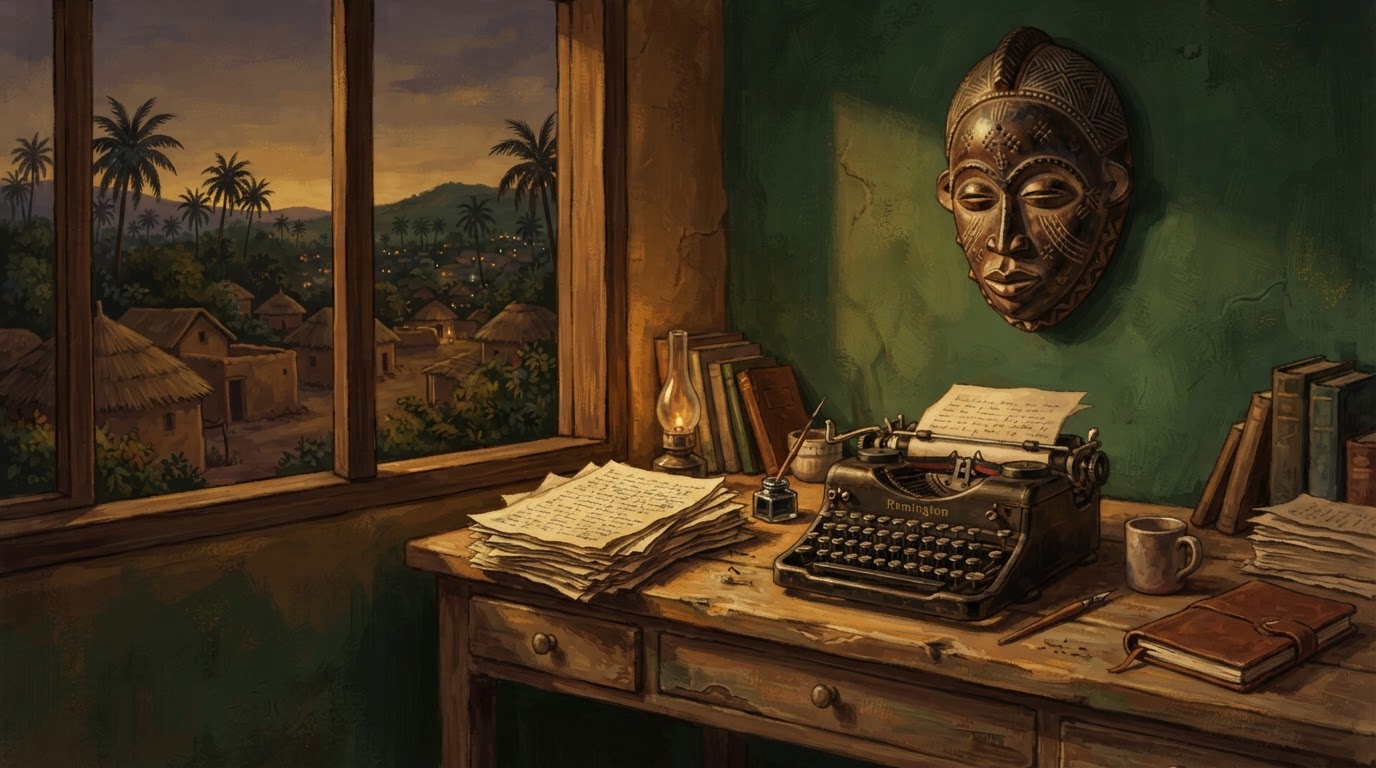
    For centuries, Africa was described to the world mostly by outsiders: explorers, missionaries, colonial officials and novelists who saw the continent as a dark backdrop for European adventures. Chinua Achebe changed that. His first novel, Things Fall Apart, told the story of colonialism from the inside, through the eyes of an Igbo community. It became one of the most widely read books ever written by an African author and opened the door for generations of African writers.

    At a glance

    • Born: 16 November 1930, Ogidi, eastern Nigeria
    • Died: 21 March 2013, Boston, United States
    • Field: Literature, education, publishing
    • Known for: Things Fall Apart (1958); founding editor of the African Writers Series; Man Booker International Prize 2007

    Between two worlds

    Achebe was born Albert Chinualumogu Achebe in Ogidi, in what is now Anambra State. His parents were Christian converts, and his father worked as a teacher and evangelist. Yet the village around him still carried the traditions, proverbs and festivals of Igbo life. Achebe grew up at the crossroads of these two worlds, and that tension would become the heart of his writing.

    He was a gifted student and won a place at University College, Ibadan, then part of the University of London. He began studying medicine but switched to English, history and religion. While reading the European novels about Africa assigned in class, he grew frustrated. One of them was Joyce Cary’s Mister Johnson, which portrayed a Nigerian clerk as a figure of fun. Achebe later said he realised that if Africans did not tell their own stories, others would continue to tell them badly.

    Things Fall Apart

    After university, Achebe worked for the Nigerian Broadcasting Corporation. In 1958, two years before Nigerian independence, he published Things Fall Apart. The novel follows Okonkwo, a proud and respected man in the village of Umuofia, as missionaries and colonial government arrive and his world begins to collapse.

    What made the book revolutionary was its portrait of Igbo society as complex and fully human. Umuofia has laws, courts, religion, poetry, economics and politics. It also has flaws, and Achebe did not hide them. He wrote in English, but filled it with Igbo proverbs and rhythms, showing that the colonial language could be bent to carry African thought. The book has sold millions of copies and been translated into more than 50 languages.

    He followed it with No Longer at Ease (1960), about corruption in the new Nigerian elite; Arrow of God (1964), about a priest caught between his people and the British; and A Man of the People (1966), a satire of post-independence politics so sharp that it seemed to predict Nigeria’s first military coup, which happened shortly after publication.

    Building a literature

    Achebe’s influence went beyond his own books. In 1962 he became the founding editor of Heinemann’s African Writers Series, which published affordable editions of African fiction, poetry and drama. The series introduced readers around the world, and in African schools, to writers such as Ngũgĩ wa Thiong’o, Buchi Emecheta, Nuruddin Farah and many others. For many African students, it was the first time they read literature about people like themselves.

    War and exile

    The Nigerian Civil War of 1967–1970 shattered Achebe’s life. As an Igbo, he supported the breakaway state of Biafra and travelled abroad to seek support for it. The war killed huge numbers of people, many through famine caused by the blockade. Achebe’s home and his library were destroyed. Decades later, in his final book, There Was a Country (2012), he returned to that period with grief and anger, and the book sparked fierce debate in Nigeria.

    Challenging the canon

    In a famous 1975 lecture, later published as “An Image of Africa”, Achebe argued that Joseph Conrad’s Heart of Darkness, a classic of English literature, was racist. He said the book used Africa only as a backdrop for European moral drama, denying Africans speech and humanity. The lecture shocked many literary scholars but changed how the novel is taught. Today, almost no serious discussion of Heart of Darkness ignores his critique.

    Later years

    In 1990 a car accident in Nigeria left Achebe paralysed from the waist down. He moved to the United States, where he taught at Bard College and later Brown University. His later novel Anthills of the Savannah (1987), about power and dictatorship, was shortlisted for the Booker Prize. In 2007 he won the Man Booker International Prize for his body of work.

    He remained a sharp critic of Nigeria’s leaders. Twice, in 2004 and 2011, he turned down national honours, saying he could not accept them while the country was so badly governed. His short book The Trouble with Nigeria (1983) opens with the blunt judgement that Nigeria’s problem is, simply, a failure of leadership. He died in Boston on 21 March 2013, aged 82.

    Why he matters

    Achebe is often called the father of modern African literature, a title he never much liked. But it reflects something real. He proved that African life was worthy of serious literature, and that African writers did not need to imitate Europe to be read by the world. He also showed that writers carry responsibility: to tell the truth about their societies, including truths their leaders would rather not hear.

    Achebe was fond of a proverb: until the lions have their own historians, the history of the hunt will always glorify the hunter. His life’s work was to make sure Africa had its own historians.

  • Wangari Maathai (1940–2011): The Woman Who Planted Millions of Trees

    Wangari Maathai (1940–2011): The Woman Who Planted Millions of Trees

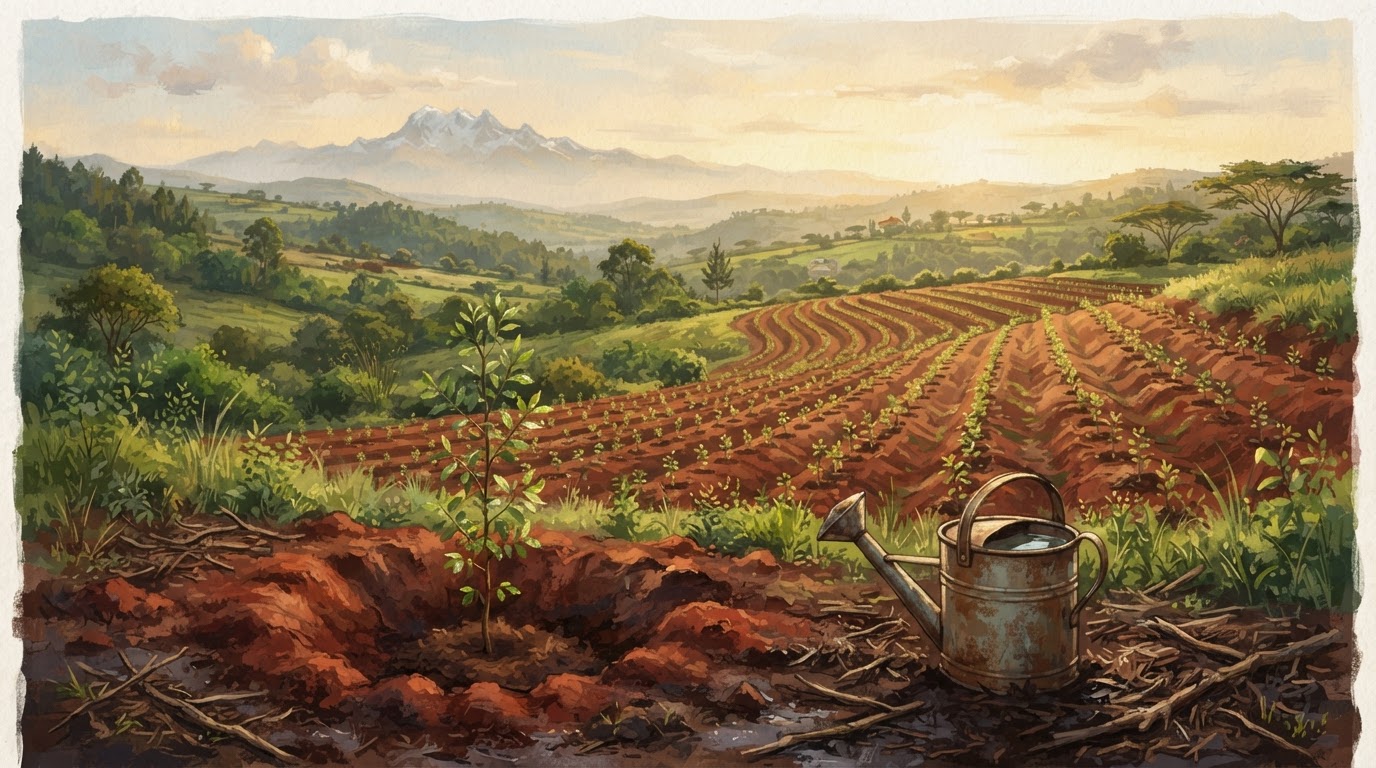
    Wangari Maathai started with a simple idea: if rural women planted trees, they would have firewood, clean water and healthier soil. That idea grew into the Green Belt Movement, one of Africa’s most successful environmental campaigns. Along the way, Maathai became a scientist, a politician, a fierce critic of authoritarian rule and, in 2004, the first African woman to win the Nobel Peace Prize.

    At a glance

    • Born: 1 April 1940, Ihithe, Nyeri District, Kenya
    • Died: 25 September 2011, Nairobi
    • Field: Environment, science, human rights, politics
    • Known for: Founding the Green Belt Movement; Nobel Peace Prize 2004

    Growing up in the highlands

    Maathai grew up in the central highlands of Kenya, among streams, fig trees and fertile farmland. Her mother sent her to school at a time when few girls in rural Kenya received an education. She excelled, and in 1960 she was one of around 300 young Kenyans selected for scholarships to study in the United States, a programme often called the “Kennedy Airlift”.

    She earned a degree in biology from Mount St Scholastica College in Kansas and a master’s degree from the University of Pittsburgh. Back in Kenya, she completed a doctorate at the University of Nairobi in 1971, becoming the first woman in East and Central Africa to earn a PhD. She went on to head the university’s department of veterinary anatomy, another first for a woman.

    Listening to rural women

    Through her work with the National Council of Women of Kenya, Maathai heard the same complaints again and again. Rural women said streams were drying up, firewood was harder to find and food supplies were less secure. Maathai saw the common cause: deforestation. When forests disappeared, soil eroded, water sources dried up and women walked further every day to meet their families’ basic needs.

    Her answer was practical. In 1977 she launched what became the Green Belt Movement, paying women a small sum for each seedling that survived. The approach gave women income, restored land and built confidence. The movement has since planted tens of millions of trees across Kenya, and its model spread to other African countries.

    Standing up to power

    Maathai quickly understood that environmental damage was linked to bad governance. Land grabs, corruption and the lack of accountability all fed deforestation. That put her in direct conflict with the government of President Daniel arap Moi.

    In 1989 she led opposition to a plan to build a huge office tower in Uhuru Park, one of the few green spaces in central Nairobi. She was mocked in parliament and publicly attacked, but foreign investors withdrew and the project was abandoned. In the late 1990s she campaigned against the illegal allocation of Karura Forest to private developers. During one protest she and her supporters were attacked and beaten. She was arrested several times over the years, and at times went into hiding.

    She also joined campaigns for multiparty democracy and for the release of political prisoners. In 1992 she took part in a hunger strike with mothers of political prisoners at Uhuru Park, where police broke up the protest and she was injured.

    Parliament and the Nobel Prize

    When Kenya’s political landscape changed in 2002, Maathai was elected to parliament for Tetu constituency with an overwhelming majority. She served as assistant minister for environment and natural resources.

    In 2004 the Norwegian Nobel Committee awarded her the Nobel Peace Prize for her contribution to sustainable development, democracy and peace. It was the first time the prize had been given for environmental work, and the committee’s decision made a clear argument: peace depends on how societies manage their natural resources. Competition over land, water and forests drives many conflicts, especially in Africa.

    Writing and later life

    Maathai wrote several books, including her memoir Unbowed (2006) and The Challenge for Africa (2009), in which she argued that Africa’s problems could not be blamed only on outsiders. She called on African leaders and citizens to take responsibility for governance, cultural identity and the environment.

    She also became a voice in international climate talks and served as a goodwill ambassador for the Congo Basin forest ecosystem. She died of ovarian cancer in Nairobi on 25 September 2011, aged 71. At her request, she was cremated rather than buried in a wooden coffin, so that no tree would be cut down for her.

    The hummingbird

    Maathai often told a story about a forest fire. All the animals stood watching, overwhelmed. Only a tiny hummingbird flew back and forth to a stream, carrying one drop of water at a time. When the larger animals asked what difference it could possibly make, the hummingbird replied that it was doing the best it could. Maathai said she wanted to be like the hummingbird.

    Why she matters

    Maathai connected things that others treated separately. She showed that the environment is not a luxury issue for rich countries; for millions of African families, it is about food, water, firewood and survival. She showed that ordinary women, often ignored by policy makers, could restore whole landscapes. And she showed that protecting nature sometimes means confronting those in power.

    Today, as climate change hits African farmers hardest, her message feels more urgent than ever. Large tree-planting and land-restoration projects across the continent, such as the Great Green Wall across the Sahel, follow a path she helped clear.

  • Nelson Mandela (1918–2013): The Prisoner Who Freed a Nation

    Nelson Mandela (1918–2013): The Prisoner Who Freed a Nation

    This is the first profile in our new Biographies section, which tells the stories of people who changed the world for the better over the past hundred years, in every field and from every region.

    Few people in modern history have carried as much moral authority as Nelson Rolihlahla Mandela. He spent 27 years in prison and came out not seeking revenge but offering a hand to the people who had jailed him. That choice helped South Africa avoid the civil war many had predicted, and it made him a symbol of freedom far beyond Africa.

    At a glance

    • Born: 18 July 1918, Mvezo, Eastern Cape, South Africa
    • Died: 5 December 2013, Johannesburg
    • Field: Politics, human rights, law
    • Known for: Leading the struggle against apartheid; South Africa’s first democratically elected president (1994–1999); Nobel Peace Prize 1993

    A boy from the Eastern Cape

    Mandela was born into the Thembu royal family in the village of Mvezo. His given name, Rolihlahla, is often translated as “pulling the branch of a tree”, or more loosely, “troublemaker”. A teacher at his primary school gave him the English name Nelson, as was common for African children at the time.

    After his father died, he was raised under the guardianship of the Thembu regent at Mqhekezweni, where he watched tribal elders settle disputes through long discussion and consensus. He later said this taught him that a leader should listen first and speak last. He studied at the University College of Fort Hare, one of the few institutions open to Black South Africans, and later moved to Johannesburg, where he studied law.

    Lawyer and activist

    In Johannesburg, Mandela saw the daily humiliations of segregation up close. In 1944 he helped found the African National Congress Youth League, which pushed the ANC towards mass action. When the National Party came to power in 1948 and began building the formal system of apartheid, the stakes rose sharply.

    In 1952 Mandela and Oliver Tambo opened South Africa’s first Black-run law firm, defending people charged under apartheid’s pass laws and land rules. The same year he helped lead the Defiance Campaign, in which thousands of people deliberately broke unjust laws. From 1956 he was one of 156 activists tried for treason in a case that dragged on until 1961, when all the accused were acquitted.

    From non-violence to armed struggle

    The turning point came in 1960, when police at Sharpeville opened fire on unarmed protesters, killing 69 people. The government banned the ANC. Mandela concluded that peaceful protest alone could not defeat a state willing to shoot its citizens, and in 1961 he co-founded Umkhonto we Sizwe (“Spear of the Nation”), the ANC’s armed wing. Its early campaign targeted infrastructure rather than people.

    He was arrested in 1962. At the Rivonia Trial, where he faced the possibility of the death penalty, he gave a statement from the dock that ended by saying he cherished the ideal of a free and democratic society and was prepared to die for it. In June 1964 he and several co-accused were sentenced to life imprisonment.

    Twenty-seven years

    Mandela spent 18 of his 27 years in prison on Robben Island, breaking rocks in a lime quarry and sleeping in a tiny cell. Prisoners turned the island into what they called a “university”, teaching one another history, politics and law. He was later moved to Pollsmoor Prison and then to Victor Verster Prison, where he began secret talks with the government.

    Outside, his name became a rallying cry. The international anti-apartheid movement, sanctions, sporting boycotts and resistance within South Africa all built pressure on the regime. African states, especially the Frontline States of Southern Africa, paid a heavy price for supporting the struggle. Mandela repeatedly refused offers of conditional release, saying that only free men can negotiate.

    Freedom and the hard road to democracy

    On 11 February 1990, Mandela walked out of Victor Verster Prison. The four years that followed were among the most dangerous in South Africa’s history. Political violence killed thousands of people, and the assassination of Chris Hani in 1993 brought the country close to collapse. Mandela’s televised appeal for calm that night is often seen as the moment he became the country’s leader in practice before he was in law.

    He and President F.W. de Klerk shared the Nobel Peace Prize in 1993. In April 1994, South Africans of all races voted together for the first time, and Mandela was inaugurated as president on 10 May 1994.

    President of reconciliation

    As president, Mandela focused on holding a divided country together. He backed the Truth and Reconciliation Commission, chaired by Archbishop Desmond Tutu, which offered amnesty to those who fully confessed political crimes. He wore the Springbok rugby jersey, long a symbol of white South Africa, at the 1995 Rugby World Cup final. His government passed a new constitution in 1996 that remains one of the most progressive in the world.

    Then he did something rare among African leaders of his generation, and leaders anywhere: he stepped down after one term, in 1999. In doing so, he showed that power belonged to institutions and voters, not to a single man.

    Later years

    In retirement, Mandela campaigned on HIV/AIDS at a time when the subject was surrounded by stigma, and announced in 2005 that his own son had died of AIDS-related illness. He helped found The Elders, a group of former leaders working on peace and human rights. The United Nations declared his birthday, 18 July, Nelson Mandela International Day. He died at his home in Johannesburg on 5 December 2013, aged 95.

    An honest legacy

    Mandela’s legacy is not beyond debate. Some South Africans argue that the political settlement of the 1990s left economic power largely untouched, and that land and wealth remain deeply unequal three decades later. Others note that he worked within the constraints of his time: a fragile state, a powerful army and an economy that could have collapsed. Mandela himself always insisted he was not a saint, “unless you think of a saint as a sinner who keeps on trying”.

    Why he matters

    Mandela showed the world that an African leader could command global respect on African terms. He proved that reconciliation is a strategy, not a weakness, and that giving up power can be the most powerful act of all. For a continent still wrestling with leaders who cling to office, his decision to leave after one term remains a standard against which others are measured.