Category: Pan-Africanism

Ideas from Nkrumah, Fanon, Rodney, Sankara, Cabral and Biko, applied to Africa today.

  • What America’s Midterms Mean for Africa

    What America’s Midterms Mean for Africa

    America After the Midterms, Part 10 of 10.

    The day before Americans voted, Washington delivered another blow to Africa’s largest economy. On 2 November, the Office of the US Trade Representative announced that South Africa and Rwanda would lose their eligibility for the African Growth and Opportunity Act (AGOA) from 1 January 2027. AGOA is the US law that gives sub-Saharan African countries duty-free access to the American market.

    Days later, Democrats won control of Congress. Many in Pretoria and across the continent hoped this would mean relief. The analysts are cautious.

    Why relief will be slow

    As Business Day and Briefly News reported, analysts warn that the Democratic victory will not quickly change US policy towards South Africa. Trade and foreign policy remain largely in the President’s hands, and he still holds the veto. One analyst told Business Day that South Africa is unlikely to be on Congress’s agenda for now. Washington’s attention will be absorbed by the Iran war, tariffs, healthcare and investigations.

    The Trump administration gave its reasons in a letter to President Cyril Ramaphosa: concerns about bribery and corruption, tariff and non-tariff barriers against US goods, and international security concerns. Critics, including a group of US experts quoted by Daily Maverick, argue the decision put political spectacle ahead of US strategic interests and risks handing China an advantage.

    What is at stake

    Reuters reported that South Africa exported about 1.7 billion dollars of goods under AGOA in 2025. Trade Minister Parks Tau has stressed that AGOA, while important, is not the whole economic relationship. Exports under AGOA are a small share of South Africa’s total trade, but they matter greatly to particular industries, such as vehicles, citrus and wine, and to the workers who depend on them.

    Beyond South Africa, the continent has also felt the impact of the President’s sweeping tariffs, the cuts to development assistance, and the Iran war’s effect on fuel and food prices.

    Where the new Congress could help

    There are openings. Africa Briefing argues the result gives African governments a diplomatic opportunity. Congress controls the budget for foreign aid and can protect programmes such as health funding. It can hold hearings on trade policy, and it will shape any future renewal of AGOA itself. Ramaphosa welcomed the results. South Africa is also pursuing direct bilateral trade arrangements.

    The Pan-African lesson

    The deeper lesson is uncomfortable. For 25 years AGOA has been a preference granted by Washington, and it can be withdrawn by Washington. Africa’s prosperity cannot depend on the mood of one American president or the outcome of one American election.

    Africa needs three things: to make the African Continental Free Trade Area work so that African countries trade more with each other; to bargain together with outside powers rather than one country at a time; and to diversify its partners, including the Gulf, Asia, Europe and Latin America, without simply swapping one dependency for another.

    The American midterms show the strength of a democracy that can check its own leaders. Africa’s answer should be to build democracies and economies strong enough that our future is decided in Abuja, Accra, Harare, Nairobi and Pretoria, not in Washington.

    This concludes our ten-part series, America After the Midterms. We welcome your comments and corrections.


  • Ghana–South Africa Visa Waiver Agreement: Strengthening Relationships and Boosting Trade and Tourism

    Ghana–South Africa Visa Waiver Agreement: Strengthening Relationships and Boosting Trade and Tourism


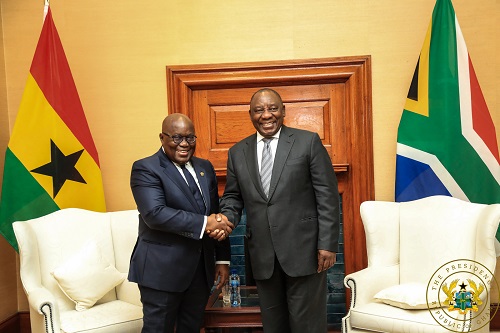
    The recent visa waiver agreement between Ghana and South Africa marks a significant milestone in enhancing bilateral relations between the two countries. This landmark agreement not only facilitates seamless travel for citizens of both nations but also paves the way for fostering closer ties and promoting trade and tourism. By setting an example for other African countries, Ghana and South Africa are championing the vision of a borderless Africa, where Africans can travel freely without hindrances. This article explores the impact of the Ghana-South Africa visa waiver on their relationship, as well as the benefits it brings to trade, tourism, and the broader African continent.

    Strengthening Bilateral Relations:
    The visa waiver agreement signifies the commitment of Ghana and South Africa to deepen their bilateral relations. By eliminating the need for visas, both countries have removed a major barrier that often hinders travel and business opportunities. This agreement is a testament to their shared vision of promoting closer ties, fostering cultural exchange, and enhancing people-to-people connections. It establishes a foundation for increased cooperation in various fields, including trade, investment, education, and technology.

    Boosting Trade:
    With South Africa being Africa’s second-largest economy and Ghana’s vibrant and growing economy, the visa waiver agreement holds immense potential for boosting trade between the two nations. Removing visa requirements will facilitate easier movement of business professionals, entrepreneurs, and investors, enabling them to explore opportunities in each other’s markets. Increased trade activities can lead to the exchange of goods, services, and expertise, benefiting both countries’ economies and contributing to overall regional economic growth.

    Promoting Tourism:
    The visa waiver agreement is a game-changer for promoting tourism between Ghana and South Africa. Both countries boast rich cultural heritage, diverse landscapes, and vibrant tourism sectors. The removal of visa requirements will encourage more tourists from both nations to explore each other’s attractions, creating a positive impact on the tourism industries of both countries. Ghana’s historical sites, such as Cape Coast Castle and Kakum National Park, and South Africa’s iconic landmarks, including Table Mountain and Kruger National Park, will become more accessible to travelers, leading to increased tourist arrivals and revenue generation.

    Inspiring Other African Nations:
    The Ghana-South Africa visa waiver agreement sets a precedent for other African countries to follow. As pioneers in facilitating visa-free travel, Ghana and South Africa inspire other nations to consider similar agreements, thereby fostering a sense of unity and integration across the continent. A borderless Africa, with simplified travel procedures, will encourage intra-African trade, tourism, and cultural exchange, ultimately contributing to economic growth and regional development.


    The visa waiver agreement between Ghana and South Africa ushers in a new era of strengthened bilateral relations, increased trade, and enhanced tourism opportunities. By removing barriers to travel, both countries have set an example for other African nations to emulate. The agreement not only benefits the citizens of Ghana and South Africa but also contributes to the broader vision of a borderless Africa. As more African nations embrace visa-free travel, the continent moves closer to unlocking its full potential, fostering economic integration, and creating a brighter future for all Africans.

Is this your new site? Log in to activate admin features and dismiss this message
Log In