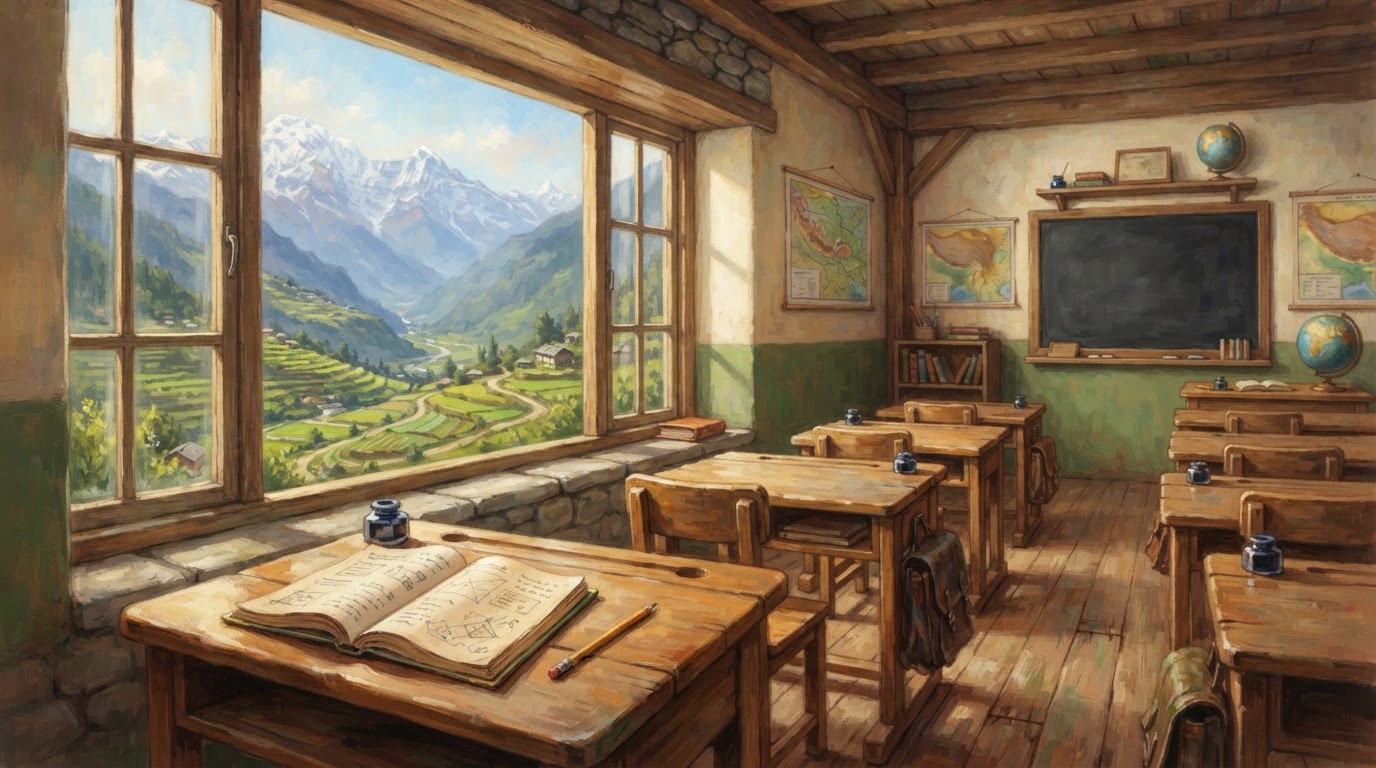
Malala Yousafzai was 15 years old when a gunman stopped her school bus in Pakistan’s Swat Valley and shot her in the head. Her crime was saying, publicly and repeatedly, that girls had a right to go to school. She survived, and instead of being silenced she became the world’s most recognised advocate for girls’ education. At 17 she became the youngest person ever to receive the Nobel Peace Prize.
At a glance
- Born: 12 July 1997, Mingora, Swat Valley, Pakistan
- Field: Education, human rights
- Known for: Campaigning for girls’ education; Nobel Peace Prize 2014 (shared with Kailash Satyarthi); co-founder of Malala Fund
A school in the valley
Malala grew up in Mingora, the main town of the Swat Valley in north-west Pakistan, a region of mountains, rivers and orchards once known as a tourist destination. Her father, Ziauddin Yousafzai, was a teacher and education activist who ran a group of schools, including one for girls. He encouraged his daughter to speak her mind, unusual in a society where girls were often expected to stay quiet.
From around 2007, the Pakistani Taliban gained control of much of Swat. They banned television and music, attacked those who opposed them and began destroying schools, especially girls’ schools. Eventually they ordered that girls stop attending school altogether.
Speaking out
In early 2009, aged 11, Malala began writing an anonymous diary for the BBC’s Urdu service under a pen name, describing life under Taliban rule and her fear of losing her education. She went on to speak openly in interviews and documentaries, arguing that girls had a right to learn. Her profile grew within Pakistan, and in 2011 she received Pakistan’s first National Youth Peace Prize.
The Pakistani army pushed the Taliban out of Swat’s main towns in 2009, but the militants did not disappear. Her visibility made her a target.
The attack
On 9 October 2012, a gunman boarded Malala’s school bus, asked which one was Malala, and shot her. The bullet went through her head and neck. Two other girls were also wounded. She was flown first to a military hospital in Pakistan and then to the Queen Elizabeth Hospital in Birmingham, England, which specialised in treating gunshot injuries.
Against expectations, she recovered. The attack provoked outrage across Pakistan and around the world. Instead of frightening girls away from school, it turned Malala into a global symbol of the right to education.
A global voice
On her 16th birthday, 12 July 2013, Malala addressed the United Nations in New York. She called for free, compulsory education for every child and said that one child, one teacher, one pen and one book could change the world. The UN declared the date “Malala Day”. The same year, she published her memoir, I Am Malala, and she and her father co-founded the Malala Fund, which supports education programmes for girls in countries including Pakistan, Afghanistan, Nigeria and Ethiopia.
In 2014 she shared the Nobel Peace Prize with Kailash Satyarthi, an Indian campaigner against child labour. The pairing, a Pakistani Muslim and an Indian Hindu, was widely seen as a message of peace between two rival nations. She learned of the prize while at school in Birmingham, and finished the school day before speaking to the media.
Africa and girls’ education
Malala has paid particular attention to Africa, where many of the world’s out-of-school girls live. In 2014, after Boko Haram kidnapped 276 schoolgirls from Chibok in north-east Nigeria, she travelled to Nigeria, met families of the missing girls and pressed the government to do more. She marked her 18th birthday in 2015 by opening a school for Syrian refugee girls in Lebanon. The Malala Fund has backed local education campaigners in several African countries, focusing on keeping girls in secondary school.
Criticism and complexity
In Pakistan, reactions to Malala have been mixed. Many celebrate her as a national hero. Others have accused her, without evidence, of serving Western interests, or have spread conspiracy theories about the attack. Some critics abroad argue that the attention given to one individual can overshadow the work of many local activists. Malala herself has often emphasised that she is “one of many girls”, and has used her platform to highlight other campaigners.
Life after the Nobel
Malala went on to study Philosophy, Politics and Economics at the University of Oxford, graduating in 2020. She married Asser Malik in 2021. She has continued campaigning, including speaking out about the Taliban’s ban on girls’ secondary and university education in Afghanistan, which she has called a form of gender apartheid.
Why she matters
Malala’s story shows the power of a single voice, but her cause is about millions. Around the world, tens of millions of girls are still out of school, many of them in sub-Saharan Africa. Educating girls is one of the most effective ways to reduce poverty, improve health and strengthen economies. Malala’s courage turned that statistic into a human story the world could not ignore.
Leave a Reply