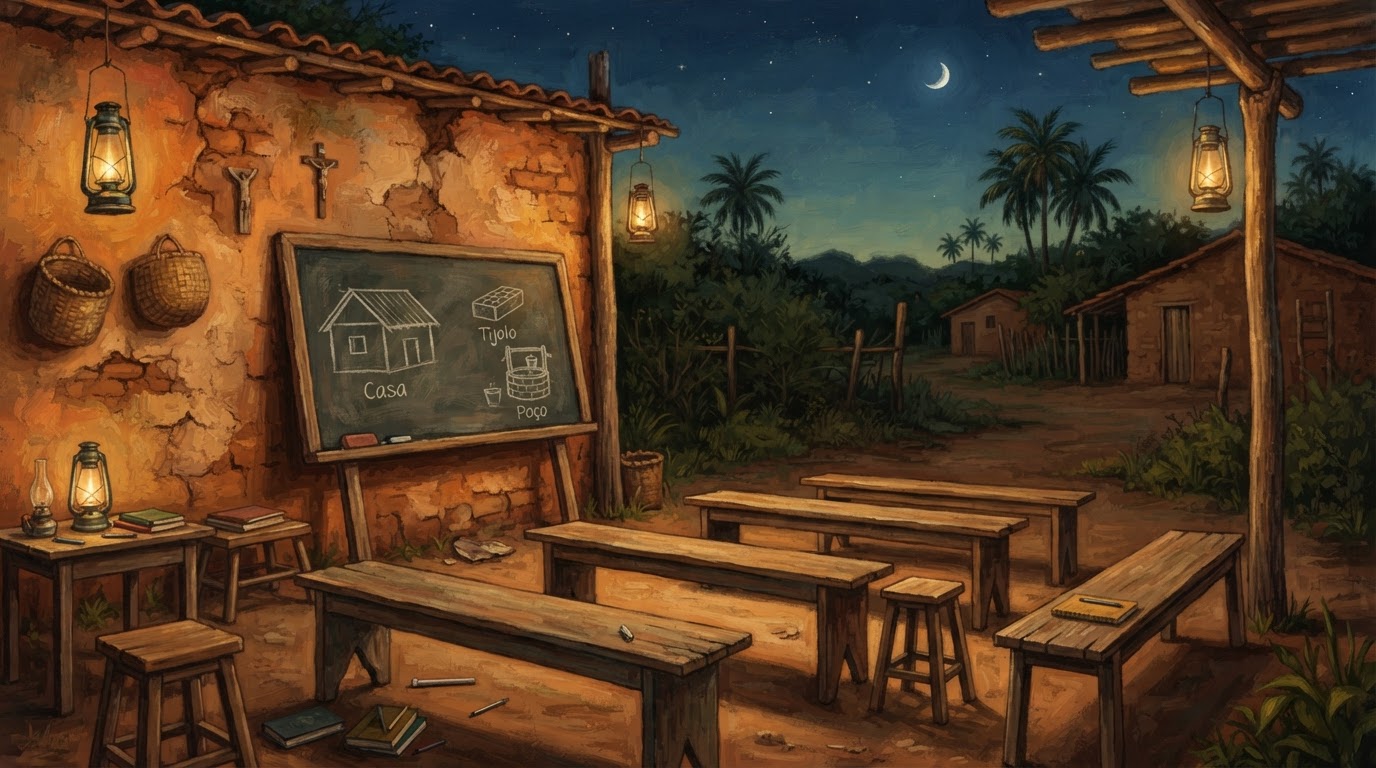
Paulo Freire believed that education is never neutral. It either teaches people to accept the world as it is, or it helps them understand and change it. The Brazilian educator developed a literacy method that taught poor, illiterate adults to read in a matter of weeks by starting with the words and problems of their own lives. His book Pedagogy of the Oppressed became one of the most influential works on education ever written, and he spent years helping newly independent African nations build education systems after colonialism.
At a glance
- Born: 19 September 1921, Recife, Brazil
- Died: 2 May 1997, São Paulo
- Field: Education, philosophy
- Known for: Pedagogy of the Oppressed (1968); adult literacy campaigns in Brazil and Africa; critical pedagogy
Hunger and learning
Freire was born into a middle-class family in Recife, in Brazil’s poor north-east. When the Great Depression hit in 1929, his family fell into poverty. He experienced hunger as a child and fell behind at school. He later said that hunger had made it impossible to concentrate, and that the experience taught him how poverty shapes what people can learn.
He studied law at the University of Recife but chose to teach instead. He worked in adult education and social services for workers and their families, which brought him into contact with poor rural and urban communities.
Forty-five days in Angicos
In Brazil at the time, people who could not read were not allowed to vote. That excluded a huge share of the poor. Freire developed a new literacy method. Instead of using children’s primers with sentences like “Eva saw the grape”, his team lived among communities, learned the words that mattered most to them, such as “brick”, “slum”, “work” and “wage”, and used those words to teach reading. Each lesson also became a discussion about the learners’ lives and why things were the way they were.
In 1963, in the small town of Angicos, about 300 sugar-cane workers learned to read and write in around 45 days. The results attracted national attention, and the federal government asked Freire to lead a national literacy programme planned to reach millions of adults.
Prison and exile
The programme never got the chance. In April 1964 a military coup overthrew Brazil’s government. The new regime saw Freire’s work as subversive, since teaching millions of poor people to read, think critically and vote threatened the established order. He was jailed for about 70 days and then went into exile, first in Bolivia and then in Chile, where he worked on agrarian reform and adult education.
Pedagogy of the Oppressed
In Chile, Freire wrote his most famous book. Pedagogy of the Oppressed criticised what he called the “banking” model of education, in which teachers deposit knowledge into passive students as if they were empty accounts. He argued that this kind of education trains people to accept oppression. Instead, he proposed education based on dialogue, in which teachers and learners investigate the world together and learners develop conscientização, a critical awareness of the social forces shaping their lives.
Published in English in 1970, the book spread rapidly and has been translated into many languages. One study of academic citations found it to be among the most cited books in the social sciences.
Freire in Africa
In the 1970s, Freire worked from Geneva with the World Council of Churches, advising education programmes around the world. Much of that work took place in newly independent Portuguese-speaking African countries.
Guinea-Bissau, which won independence in 1974 after a liberation war led by Amílcar Cabral’s movement, invited Freire to help design an adult literacy campaign. Freire admired Cabral, whose ideas about the “re-Africanisation of the mind” and education as part of liberation echoed his own. His reflections were published as Pedagogy in Process: The Letters to Guinea-Bissau. He also worked with São Tomé and Príncipe, Cape Verde, Angola and Mozambique.
Not every programme succeeded. In Guinea-Bissau, a central debate was language: Portuguese was the colonial language, but most people spoke Creole or African languages. Freire later acknowledged that teaching literacy in a language most people did not use daily had limited the campaign. It was a lesson that many African education systems are still grappling with.
Return home
Freire returned to Brazil in 1980 as the military regime loosened its grip. He taught at universities in São Paulo and, from 1989 to 1991, served as the city’s secretary of education, reforming curricula and involving parents and communities in school decisions. He died of heart failure in São Paulo in 1997, aged 75.
Why he matters
Freire’s ideas shaped literacy campaigns, community organising, adult education and teacher training around the world. In South Africa, his work influenced the Black Consciousness Movement and community education during apartheid. Critics have argued that his writing can be abstract and that his approach is too political for the classroom. Supporters reply that education is always political, and the only question is whose interests it serves.
For Africa, Freire’s central question remains urgent: are schools teaching young people to memorise and obey, or to think, question and build? On a continent with the world’s youngest population, the answer will shape the future.
Leave a Reply